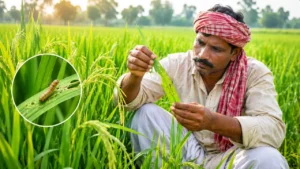
Paddy crops can face several insect pests during the growing season. Stem borers are among the pests farmers may need to watch for because their larvae feed inside the plant and can damage tillers and developing panicles. Regular field scouting helps farmers spot warning signs before damage becomes widespread.
Signs to look for
- Dead hearts: A central shoot may dry out and pull away more easily than a healthy shoot.
- Whiteheads: At a later stage, a panicle may turn pale or white and contain poorly filled grains.
- Egg masses or moth activity: Look carefully at leaves and nearby vegetation, especially during routine field checks.
- Uneven patches: Note areas where plants show unusual drying or reduced growth.
These signs can have other causes too, so inspect several plants and confirm the likely cause before taking action.
A practical scouting routine
- Walk through the field in a consistent zigzag pattern.
- Inspect plants in several locations, including field edges and the interior.
- Record the affected area, crop stage, and number of plants showing symptoms.
- Revisit the same locations to see whether symptoms are increasing.
- Ask a local agronomist or extension officer to confirm the pest if you are unsure.
Use an integrated approach
Keep field records, follow locally recommended monitoring methods, and conserve beneficial insects where possible. If intervention is needed, choose only a product registered for the crop and target pest in your area. Follow its label for dose, timing, protective equipment, re-entry interval, and pre-harvest interval. Do not spray solely because a few insects are visible.
The takeaway
Early scouting and correct identification support better decisions. Check your paddy regularly, record what you find, and seek local advice before choosing a treatment.
General educational information only. Pest pressure and recommended actions vary by region, crop stage, and season. Follow local agricultural guidance and the product label.